
This little-known topic is on the verge of completely revolutionizing the way we distribute and use energy.
It takes a little explaining, so I’m splitting this in to two emails. First, on what what a virtual power plant (VPP) is, and why it is a very big deal.
The next email will be how some in SRP leadership are failing to see the potential.
The Big Picture
Join me in imaging a future where you can generate nearly free energy during the day and either use it yourself when the sun goes down, or you can sell any extra that you’ve stored at a profit.
This is what I call your “personal energy freedom.”
Now imaging having that ability on homes, businesses or even large buildings and farms. Even apartment buildings. It means we can avoid new polluting, water-wasting power plants. It means cleaner air and more affordable power.
Stay With Me. This Gets Good.
There are two concepts that you need to understand in all of this.
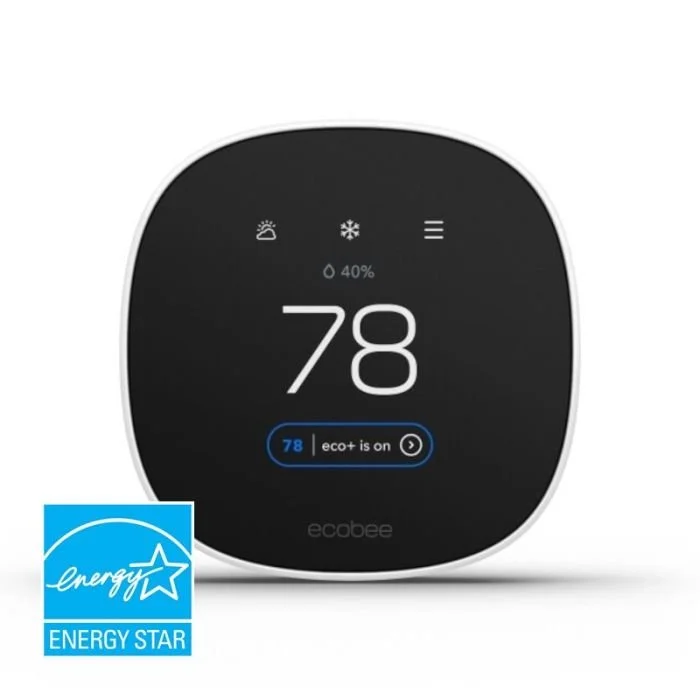
1. Thermostat VPP
Traditionally when we referred to VPP we were talking about how utilities have agreements with homes or businesses to reduce demand in times of need.
The best example is how those Nest thermostats communicates with your utility and the utility can re-set that thermostat by a couple degrees on thousands of homes all at once to reduce energy demand.
SRP has a really impressive program of this type of demand response with over 100,000 active customers, avoiding the need for about 180 megawatts of new peaking power.
2. Battery VPP
This is where things start to dramatically change.
Imagine a hundred thousand people with solar panels and batteries on their homes and businesses. When their utility needs power during peak demand stress times, they can call on a portion of the power sitting unused in those batteries.
This is laid out in an agreement with the customer, and comes with a handsome payment.
Imagine that your utility needs extra power on a hot summer day. They could go pay (hypothetically) 30 cents per kWh on the open market or they can pay their customers to access those batteries for 25 cents per kWh.
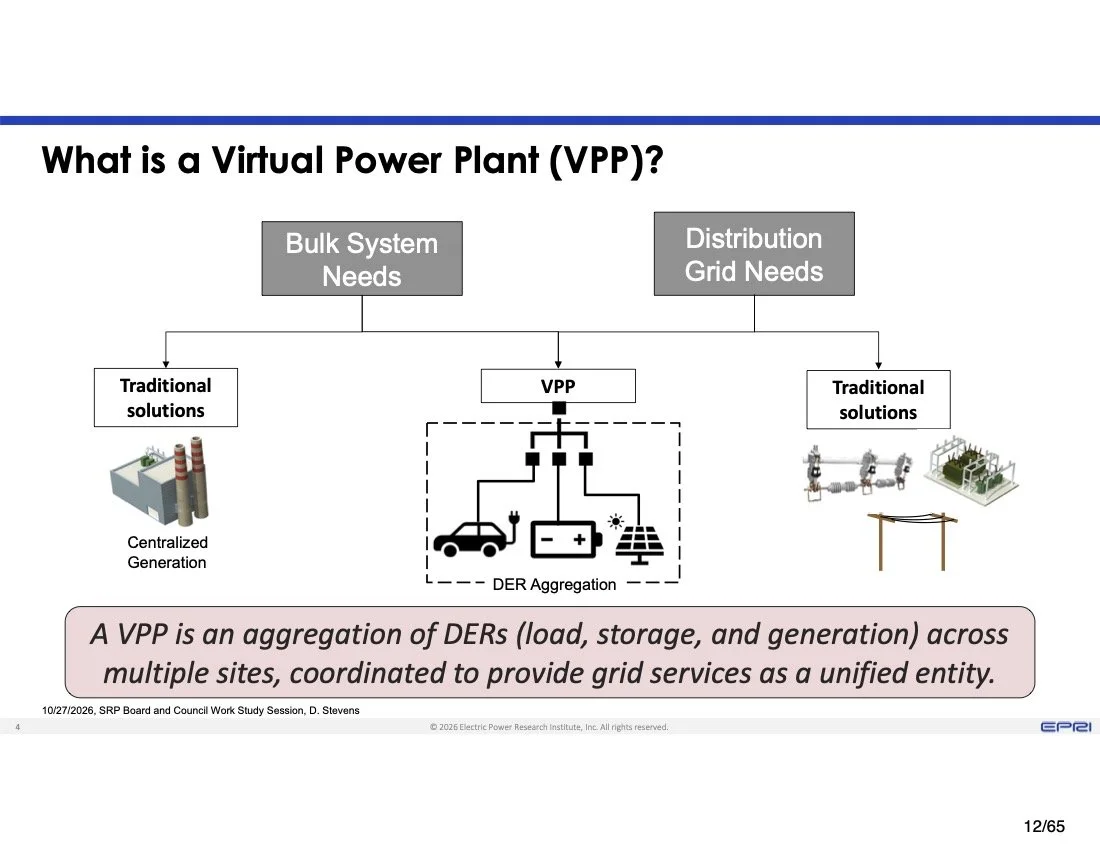
You don’t need to know what a kilowatt hour or a megawatt is to see that the utility is saving money for everyone.
They can even take power off your EV battery with the right set up, assuming if you don’t feel like buying new batteries for your house.
That is a win-win-win. All customers save money. Battery-owning customers can generate power at their homes with clean solar. They can store power for an emergency. They can help us all avoid new gas-fired power plants.
If you install solar panels and batteries on your home or business, you can store energy for emergencies, or more likely to sell back to the utility if they need it during a peak demand emergency. This helps prevent brown-outs and helps us avoid installing more dirty power plants that are designed to operate only during these peaking events, called “peaker plants”.
But, let’s take that idea out further. The cost of batteries is dropping over the long term. The company CATL out of China and even General Motors are coming out with sodium-ion batteries that will operate for twice as long (as in for decades) before being replaced, and function more safely than lithium-ion batteries (as in not blowing up).
Soon you will be able to install batteries for effectively half the cost, and they will likely operate for longer than it takes a new home owner to pay off their mortgage.
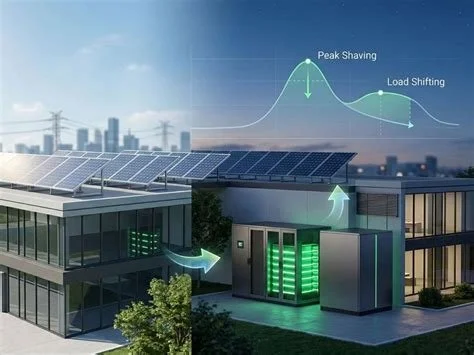
Source: SaurEnergy
Think about what that means for the hundreds of thousands of big, flat rooftop buildings around Arizona. Think about that for farms that may have massive shade structures and buildings. They can use energy when they need it and create an extra source of revenue from solar panels and batteries by selling back to the grid.
So, Where Are They?
Why aren’t we rolling these out as quickly as possible?
The answer is not all that complicated.
In the next newsletter I’m going to share with you examples of places around the country and the globe that are rolling this out incredibly quickly.
I’ll also give you a little insight to the debate around SRP about VPPs and how quickly we can roll them out —and how the invisible hand of the market may have the last word.